
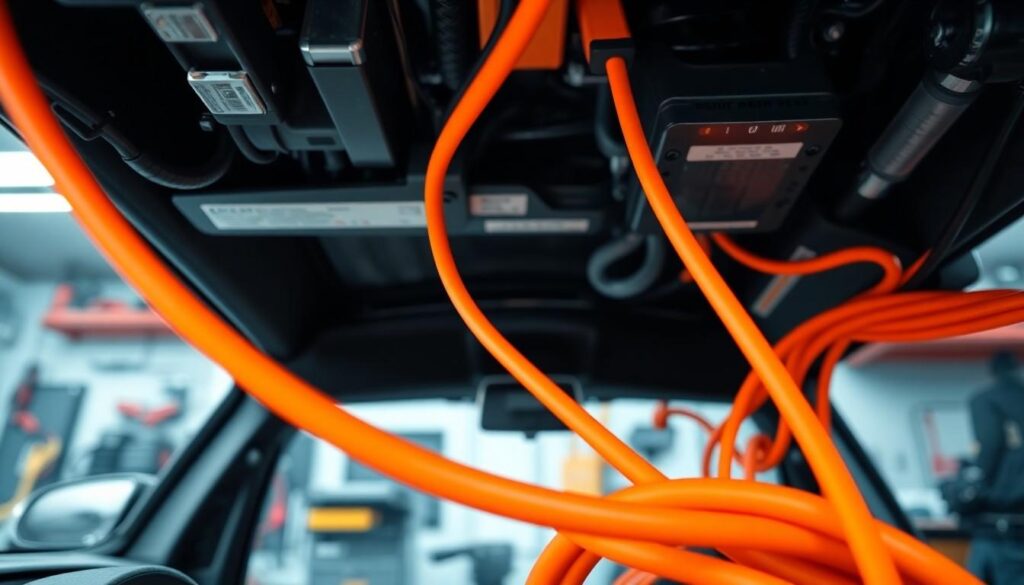

When it comes to hybrid and electric vehicles, the color of high-voltage cables might not be the first thing on a driver’s mind. But let’s face it, who wouldn’t want to impress their friends with some electrifying trivia? These cables don’t just carry power; they’re also a vibrant part of the vehicle’s identity.
Overview of High-Voltage Cables
High-voltage cables are essential components in hybrid electric and electric vehicles. These cables transport significant amounts of power from the battery to the motor and other systems. Notably, the insulation of these cables comes in vibrant colors, primarily orange, to signify their high-voltage nature. The use of orange improves visibility and safety, helping technicians easily identify high-voltage systems during maintenance.
These colorful cables serve more than just an aesthetic purpose. Their coloration aids in preventing accidental contact with energized components, reducing the risk of electrical shock. Recognizing orange as a safety standard has widespread acceptance within the automotive industry and regulatory bodies.
Manufacturers follow strict guidelines when producing these high-voltage cables. Insulation materials can withstand high temperatures and resist wear, ensuring long-lasting performance. Additionally, the cables feature shielding to minimize electromagnetic interference, enhancing vehicle efficiency.
Technicians often rely on these color codes when diagnosing issues in hybrid and electric vehicles. Knowledge of the color scheme enables quick identification and proper handling of the high-voltage systems. Staying informed about these components promotes safer service practices and effective repairs.
Overall, the high-voltage cables in hybrid and electric vehicles play a crucial role in functionality and safety. Their distinctive orange color enhances visibility while serving as an important indicator of power handling characteristics. manufactures design these systems with both performance and safety in mind, ensuring reliable operation for electric mobility.
Importance of Cable Color in Electric Vehicles

Cable color plays a significant role in electric vehicles, particularly regarding safety and adherence to industry standards.
Safety Considerations
Safety remains a top priority in electric vehicle design. Technicians use bright orange insulation on high-voltage cables for quick identification. This specific color alerts them to potential electrical hazards during maintenance. Visibility helps prevent accidental contact with live wires. In an environment where engineers work on multiple systems, the distinction provided by cable color is crucial. Understanding this color coding significantly reduces the risk of electrical shock while increasing the efficiency of service operations.
Industry Standards
Standards set by organizations like the Society of Automotive Engineers dictate the color coding for high-voltage cables. Electric vehicle manufacturers follow these guidelines to ensure uniformity across the industry. Compliance with these standards enhances safety and facilitates quicker diagnostics during repairs. The use of a specific color for high-voltage cables creates consistency in equipment design and service protocols. Manufacturers consistently prioritize quality, ensuring the cables meet durability and performance benchmarks. The guidelines reinforce best practices in electric vehicle safety management.
Common Colors Used for High-Voltage Cables
High-voltage cables in hybrid and electric vehicles feature distinct colors that enhance safety and functionality. Different colors serve specific purposes, often aligning with industry standards.
Orange: The Standard Color
Orange is the primary color for high-voltage cables in electric vehicles. This vivid shade clearly indicates the presence of high-voltage components, alerting technicians to potential electrical hazards. Using orange insulation improves visibility, making it easier for technicians to identify high-voltage systems during maintenance. Industry standards, such as those from the Society of Automotive Engineers, recommend this color to promote uniformity across manufacturers. Technicians rely on this color coding for quick identification, helping to minimize risks associated with electrical work.
Other Colors and Their Meanings
Other colors appear in high-voltage cables, each with specific meanings based on their applications. For example, yellow or green cables often indicate grounding or low-voltage systems. Blue cables might be used for signal or control wiring, differentiating them from power-carrying cables. Adhering to these color standards helps promote effective communication among technicians during repairs. Manufacturers may also use different colors to distinguish between various systems in vehicles, aiding overall service efficiency. Knowing these distinctions improves safety by preventing accidental contact with live wires.
Factors Influencing Cable Color Choices
Cable color choices depend on several factors, including manufacturer preferences and regional variations.
Manufacturer Preferences
Manufacturers often dictate cable colors based on their branding strategies. Many companies opt for bright orange to align with industry standards, ensuring safety and visibility. Some OEMs may choose specific colors for proprietary identification, differentiating their vehicles from competitors. Variances can occur when companies incorporate unique designs or materials. Custom colors occasionally indicate proprietary technology or advanced systems, highlighting a vehicle’s advanced features. Thus, manufacturer input significantly shapes color selection.
Regional Variations
Regional practices affect high-voltage cable color choices. In some areas, regulations dictate specific colors for safety compliance, impacting how manufacturers produce these components. Local markets may also prefer specific shades based on cultural perceptions of color or safety impressions. Lack of standardization between countries can result in variations in color coding. Companies often adjust color schemes to meet regional expectations, further complicating consistency. These regional differences highlight the need for awareness among technicians working on various vehicle models.
The color of high-voltage cables in hybrid and electric vehicles plays a vital role in safety and functionality. Bright orange insulation serves as a clear warning to technicians about potential electrical hazards. This color coding not only enhances visibility but also streamlines maintenance and repair processes.
As manufacturers adhere to industry standards, the use of vibrant colors promotes uniformity across the sector. Technicians must stay informed about the various color codes for different systems to ensure safe and efficient service. Ultimately, the distinctive colors of these cables are essential for both operational safety and effective communication within the automotive repair environment.


